
On this page +
Kindergarten Education Scheme — Parent Education Grant 2025-2026
The parent education curriculum framework covers understanding child development; promoting children’s health; happy and balanced development; promoting parents’ physical and mental wellbeing; and strengthening home–school cooperation and communication. It helps parents learn more systematically how to nurture healthy growth.
Sports Fun Day
Activity: Sports Fun Day
Activity objectives
Objectives: Increase children’s interest in exercise through varied sports games and establish regular exercise habits; encourage parents and children to coordinate and cooperate, increasing interaction and strengthening their relationship; encourage parents to praise children’s engagement and positive attitude and help them face difficulties and challenges courageously; build children’s confidence in sport and sense of achievement.
Overview: A variety of sports and parent–child physical games was designed around children’s abilities and interests, including a monster obstacle course, a flying-dragon roller coaster and a triathlon. Children and parents participated together in a relaxed, happy setting. An exciting parent–teacher relay brought the atmosphere to a peak. Running, jumping and throwing naturally developed coordination and body control, while also strengthening the connection between children and family members. Completing tasks brought the joy of success and sweet moments of shared exercise.
Activity record
Outcomes: Enthusiastic participation and support from children and parents created a lively atmosphere. Children joined the sports games eagerly, showing strong interest and engagement. Families cooperated and encouraged one another to complete each challenge, improving their coordination and team spirit. Running, jumping, throwing, balancing and obstacle activities involved gross motor skills, hand–eye coordination and balance, improving body control and concentration. Different games and challenges gave children experiences of success and taught them to appreciate their own and others’ performance, further building confidence and a sense of achievement.
Cherishing Our Children: Little and Big Chefs’ Sweet Moments
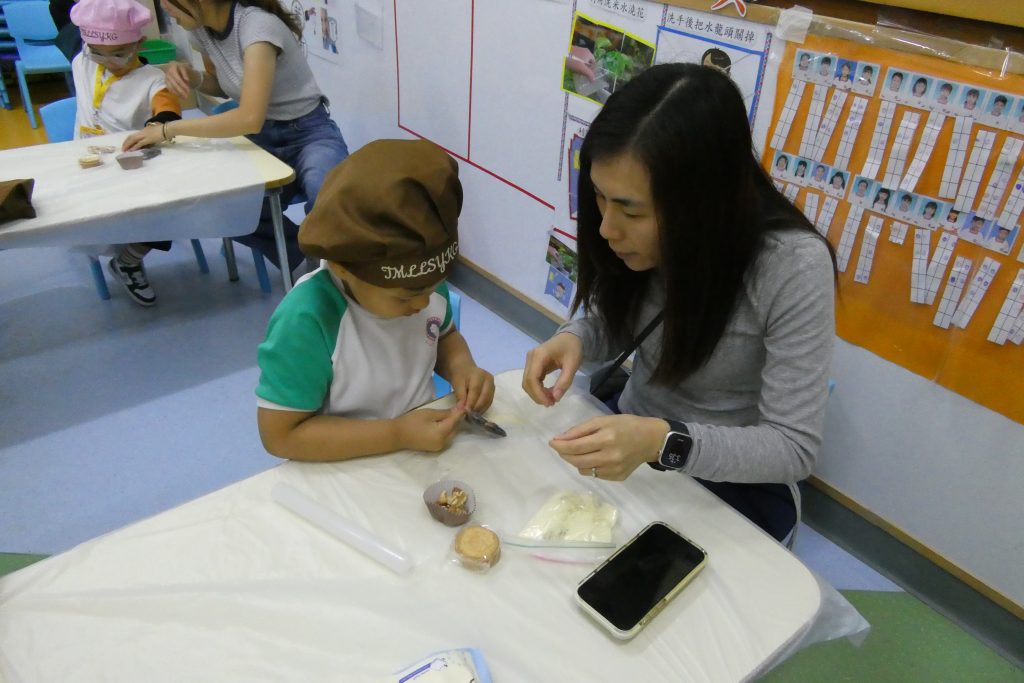
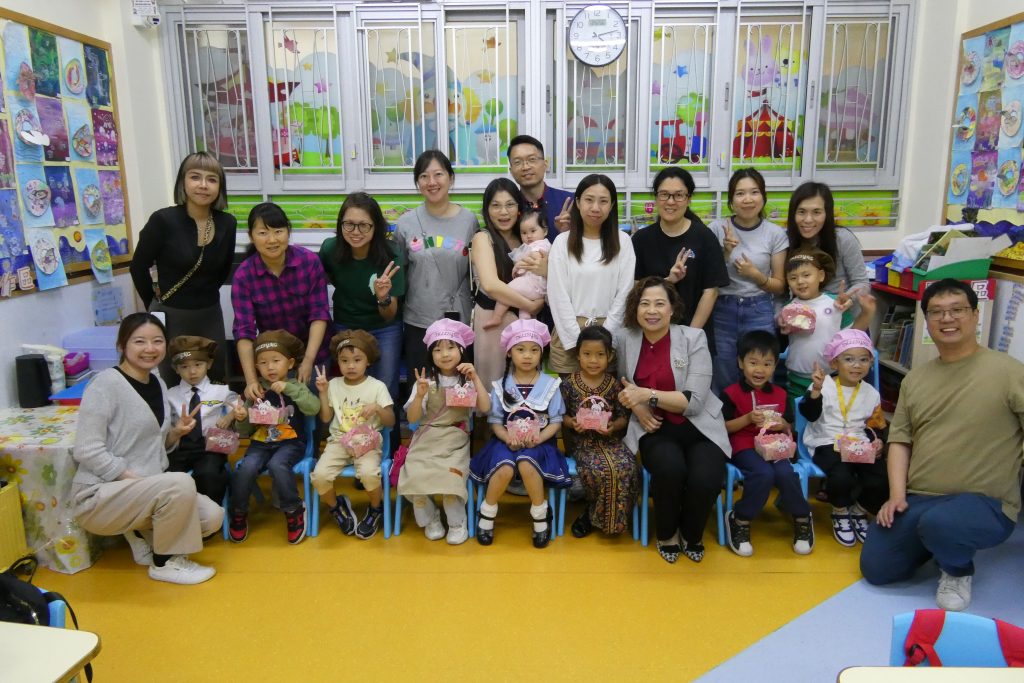
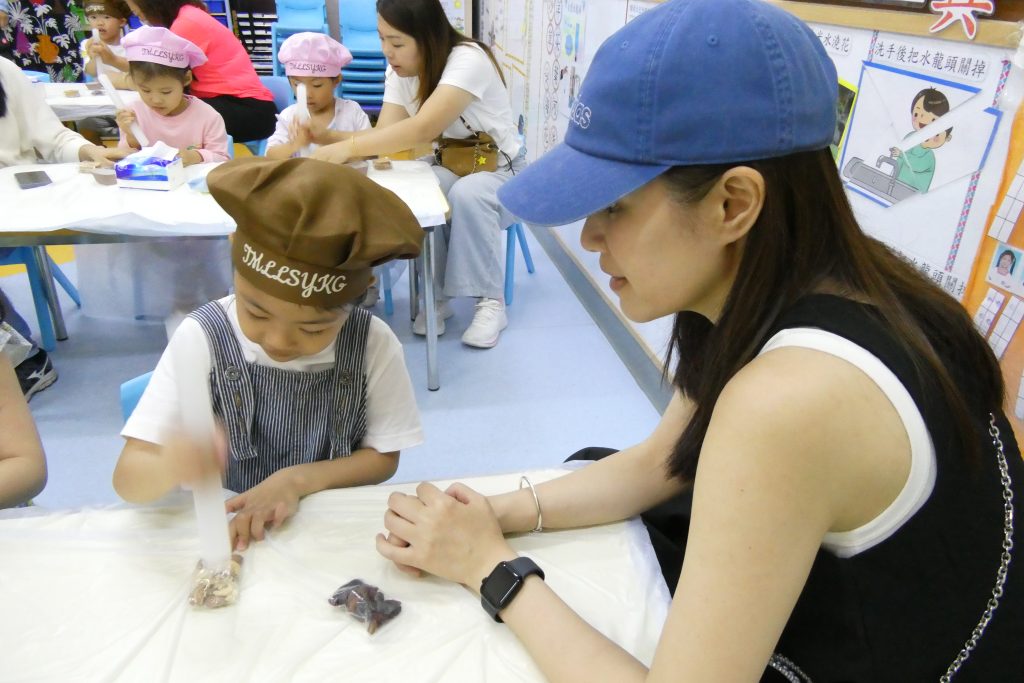
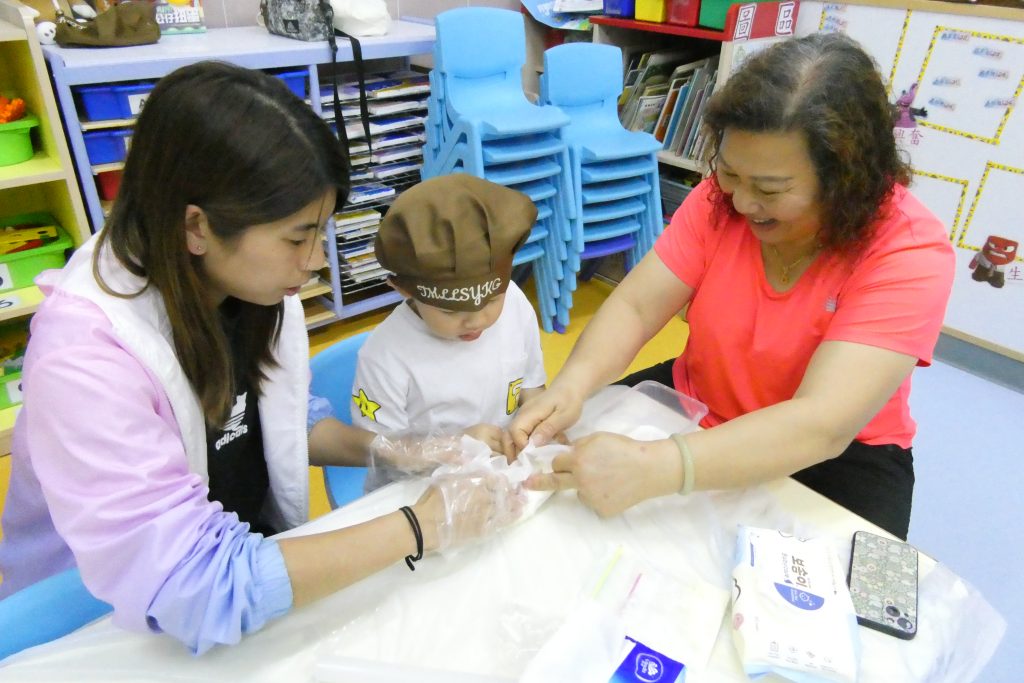
Activity: Cherishing Our Children: Little and Big Chefs’ Sweet Moments — parent–child activity
Objectives: Help children and parents discuss and divide tasks and cooperate; establish positive communication and encourage parents to appreciate children through positive language; develop fine motor skills and hand–eye coordination, sensory exploration and cognition; build confidence and a sense of achievement by appreciating their handmade snowflake crisps.
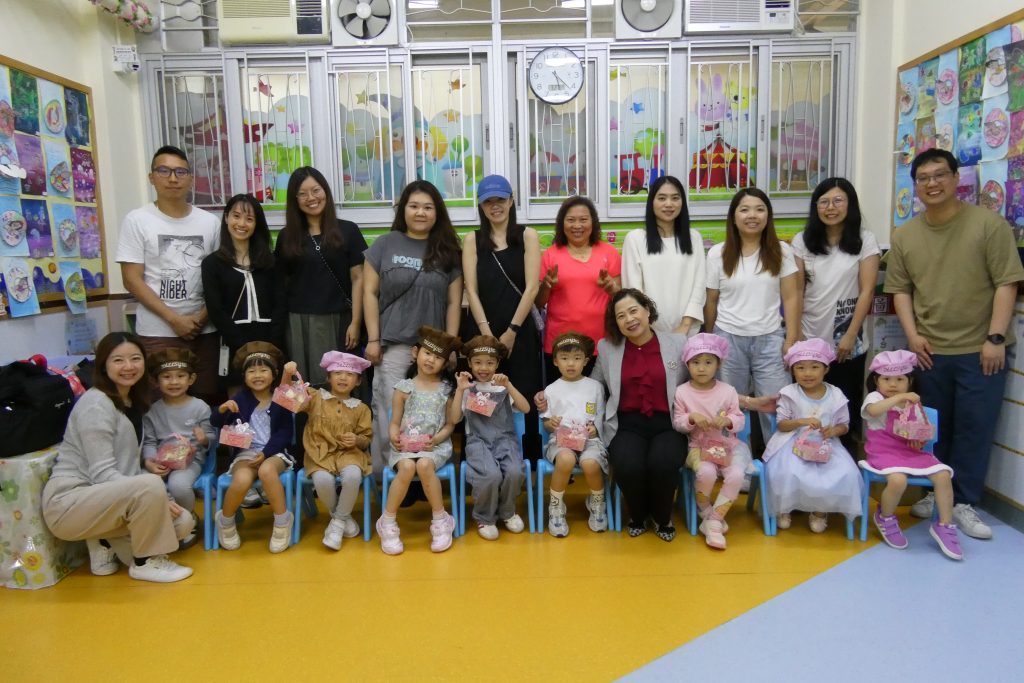
Overview: Families experienced baking together in a relaxed, enjoyable setting, creating warm moments of interaction. Making delicious snowflake crisps taught them to divide tasks and collaborate on a shared creation. Parents were encouraged to use positive language to recognise children’s attempts and effort, establishing positive communication. Kneading, pressing and stirring naturally developed fine motor skills and hand–eye coordination. Touching and observing ingredients stimulated sensory exploration and cognition. Families also learned to appreciate their own and others’ results, share the sense of success and enjoy sweet moments together.
Outcomes: The activity was very popular with children and parents. It promoted communication and cooperation: for example, parents handled heating while children crushed biscuits or stirred ingredients. Through coordinated work, parents and children learned to listen to one another and solve problems together, strengthening their understanding and teamwork. Parents were particularly encouraged to use positive language throughout and responded actively by praising their children’s attempts and efforts.
Little Mouths, Big World: a Journey through Children’s Language Development
Activity: Little Mouths, Big World: a Journey through Children’s Language Development — parent talk
Objectives: Introduce language development and characteristics in children aged 3–6; learn to distinguish possible language-development difficulties; understand positive techniques and methods that support language development.
Overview: Parents learned about language development, characteristics and difficulties in children aged 3–6, and how games, daily activities and positive approaches can improve and support language development.
Outcomes: The talk improved parents’ understanding of language development in children aged 3–6 and their practical skills for supporting language abilities. It strengthened their observation of their children’s language performance and ability to recognise possible signs of difficulty. Parents learned to use suitable games and approaches in daily life to develop language skills. This also supports earlier identification and referral to professional organisations for follow-up.